
UPDATED: 19 NOVEMBER 2025
At a breakfast briefing at Stormont today, National Energy Action Northern Ireland (NEA NI) reveals that nearly half of people in NI are worried about paying energy bills as winter approaches.
The findings highlight continued concern over energy affordability, with 39% of households classed as being in fuel poverty and one in five going without heat or power at least once in the past two years due to not being able to afford it. One in four people are reporting that rising costs have affected their health and wellbeing. As one respondent told us: ‘Having no money left to live what used to be a normal life means you withdraw from society and forego the little luxuries you used to enjoy. Life becomes mundane and pointless.’
The NI representative survey, commissioned by charity NEA NI and conducted by LucidTalk in September, also showed that continued pressure on household budgets has led to a continued rise in harmful ‘coping’ strategies. Half of NI households reduced their use of central heating. A quarter of households have gone to bed earlier to avoid sitting in a cold home. Other ways of coping include:
- Sitting in a cold house wearing coats, blankets or using a hot water bottle (26%)
- Reduced use of hot water (21%)
- Using alternative heating sources such as fan heaters (17%)
- Using credit cards to pay for heating or other essentials (11%)
- Skipping meals (7%).
In addition, 43% of respondents said that their home had been impacted by damp and mould. Respondents reported health impacts, worry for children, and property damage as a result. Others expressed cases where their landlord had not taken adequate action to make repairs. Awaab’s Law on tight repair timescales needs to be extended to both the social and private rented sector in NI.
Director of NEA NI Pat Austin says, ‘This is the fourth consecutive year that we have commissioned the polling and very worryingly nothing much has changed for many of households who are struggling day and daily just to make ends meet. Now in the mouth of winter, households here still await a new and reinvigorated fuel poverty strategy which must now be delivered as soon as possible.
‘The strategy needs to have clear targets and milestones and needs to be supported with adequate funding, otherwise we can expect the same outcome next year. Living in a cold home is extremely bad for health and well-being and, as a society, we need to say enough is enough and produce the strategies needed to tackle the issues head on. Let this be our decade of delivery for NI.’
Impact on pensioners
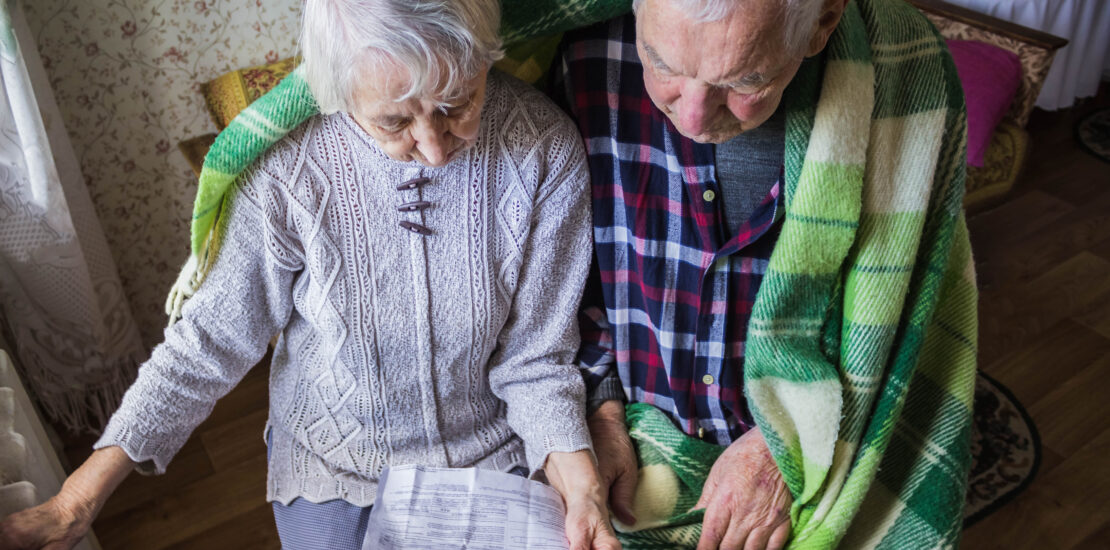
The fuel poverty rate was highest among those aged 65+, with over half in fuel poverty. Many comments tell us about the difficulties for pensioners to heat their homes.
Impact on disabled people
Over half of people with a disability are in fuel poverty (54%). The cold can exacerbate existing health conditions and it greatly affects people with disabilities. Forty percent of respondents with a disability reported health and wellbeing impacts due to living in cold homes. Isolation is also a huge problem for those who have mobility issues and cannot go out. They feel trapped in a cold home, but do not want to invite friends to a ‘fridge’. Respondents mentioned depression, a deterioration of mental health, and even suicidal thoughts.
Impact on children
National Energy Action’s Fuel Poverty Awareness Day on Wednesday 26 November 2025 will highlight the detrimental effects of fuel poverty on children.
In our survey, respondents told us about the effects fuel poverty has on children. Comments include feeling guilt for raising children in a cold home or not providing a ‘decent home’ for them, the struggle of lone parents with the cost of living, including heating their homes, and a lack of disposable income for leisure activities, including holidays with children.
Parents also mention cutting down on any ‘extras’ for themselves, so that the children don’t suffer. They talk about children studying for exams in the cold and being unable to bring their friends home. A few people also mentioned relationship problems due to the stress of high bills.
What can be done?
Financial schemes are the most popular policies that Stormont could introduce to assist with rising energy costs. The majority of respondents ranked ‘Provide greater financial assistance with energy bills’ and ‘Expand schemes that provide financial support to improve the energy efficiency of homes’ in their top three ‘actions’ the NI Assembly and NI Executive should take to tackle fuel poverty.
Consultation on the new draft strategy on fuel poverty closed in March 2025. We are currently awaiting publication of the finalised new Fuel Poverty Strategy (which is due to be submitted to the NI Executive by the end of the year for agreement). Overall, NEA NI’s response welcomed the draft strategy’s key objectives, proposed outcomes, and actions. However, we were disappointed by the lack of specific, measurable targets – particularly a clear target for reducing fuel poverty.
NEA NI is calling on the NI Executive to:
- Deliver a new, sufficiently resourced Fuel Poverty Strategy for Northern Ireland, supported by a comprehensive cross-departmental action plan.
- Establish a statutory fuel poverty target and introduce minimum energy efficiency standards, especially within the private rented sector.
- Introduce an energy social tariff to provide discounted, targeted energy bill support to low-income and vulnerable households.
- Support a Just Transition by significantly increasing investment in domestic energy efficiency, including greater grant support for low-income and vulnerable households.
- Utilise additional Barnett consequential funding from the UK Government’s £13.2bn Warm Homes Plan to tackle fuel poverty in Northern Ireland.
If you write about this on Twitter/X please include @NEANIreland and @LucidTalk
ENDS
Notes to editors:
- National Energy Action (NEA), is the national fuel poverty charity, working across England, Wales and Northern Ireland, to improve the lives of people in fuel poverty for almost 45 years. We directly support people with energy and income maximisation advice, and we advocate on issues such as the current energy crisis and the need to improve the energy efficiency of our homes. See: https://www.nea.org.uk/.
- Fuel Poverty Awareness Day is run by National Energy, the national fuel poverty charity, working across England, Wales and Northern Ireland, to improve the lives of people in fuel poverty. For more information, check out https://www.nea.org.uk/who-we-are/nea-campaigns/fpad/
- The definition of fuel poverty that National Energy Action uses is that a household is in fuel poverty if it needs to spend 10% or more of its income on energy in order to maintain a satisfactory heating regime.
- The recommended temperature to heat your home is between 18-21C.
- Around 63% of households in Northern Ireland rely on home heating oil, a non-regulated fuel.
- The Winter Excess Figures for 2023/24, released by the Northern Ireland Statistics and Research Agency (NISRA) showed that there were 740 winter excess deaths.
- For the fourth year, NEA commissioned Lucid Talk to carry-out a NI wide attitudinal poll. For this project, online polling was carried out over a period of 4 days from 12 to 15 September 2025. The project targeted the established Northern Ireland (NI) LucidTalk online Opinion Panel (16,000+ members) which is balanced by gender, age-group, area of residence and community background to ensure it is demographically representative of Northern Ireland. 1,793 full responses were collated, and 1,050 full responses were recorded and used for analysis in terms of the final results.