

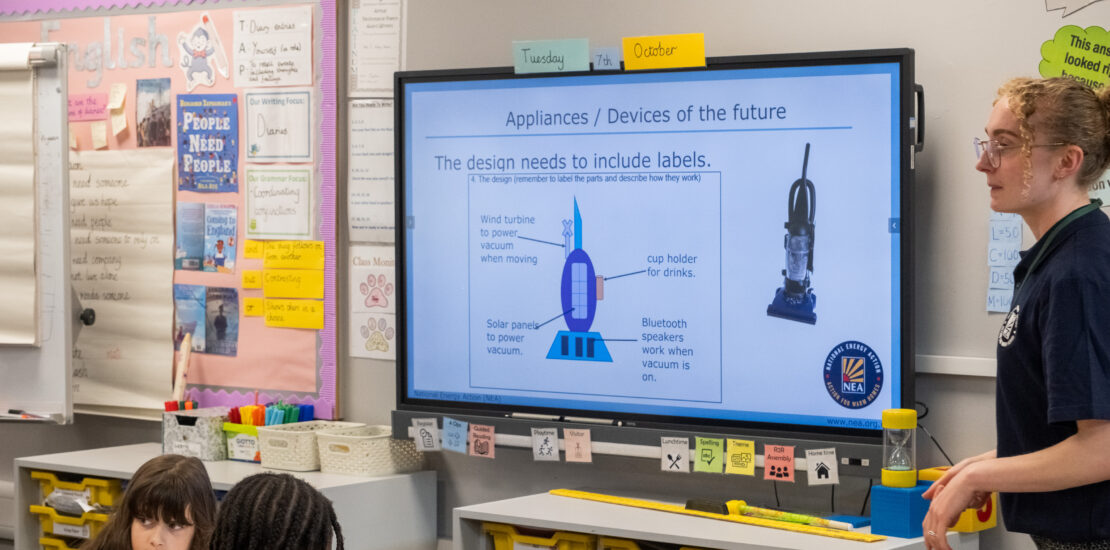
Michala Sullivan, Training Programme Delivery Manager, says the updated England Draft National Curriculum, with its renewed emphasis on practical life skills, offers an opportunity to fight fuel poverty…
The debate over knowledge versus skills has been a long-standing and hard-fought battle among educators. As governments change, education often becomes a political battleground, and this debate resurfaces time and again.
In 2014, the National Curriculum shifted decisively toward knowledge acquisition, increasing pressure on already packed timetables and prioritising traditional academic subjects. While this aimed to raise standards, it often came at the expense of broader development -squeezing out opportunities for young people to learn the skills they need for life beyond the classroom.
Yet education is more than exams. Schools and colleges pride themselves on developing the whole individual, offering experiences that build cultural capital, open doors to the world of work and prepare students for adulthood. Unfortunately, with relentless focus on English Baccalaureate achievement and Progress 8 scores, these life skills and extracurricular opportunities were pushed to the margins.
Subjects like PSHE and Citizenship, which cover vital areas such as health, finance, and civic responsibility, often become squeezed into form time alongside registration, notices, and DEAR (Drop Everything and Read) sessions. The result is a lack of dedicated time, credibility and specialist teaching for skills that matter most in real life.
A new opportunity: The draft National Curriculum 2025
The updated England Draft National Curriculum (released November 2025) signals a welcome change. It introduces a renewed emphasis on practical life skills – financial literacy, critical thinking, civic engagement, and resilience as core components of education alongside traditional subjects.
This shift creates a timely opportunity for schools to partner with organisations and build a curriculum rooted in real-world challenges. One pressing issue stands out: fuel poverty. With millions of households across the UK and 6 million children directly impacted, the need for education that empowers families to manage energy costs has never been greater.
Alongside financial education, the draft proposal emphasises embedding green skills across all subjects to ensure young people acquire the knowledge and capabilities to thrive in tomorrow’s industries and tackle the climate crisis.
Life skills in action: Tackling fuel poverty
Life skills can make a tangible difference in energy management. Teaching young people how to budget, read energy bills, and make informed choices about energy use equips them to help their families reduce costs and avoid fuel poverty – a situation where households struggle to afford adequate heating and electricity.
Imagine coupling these lessons with broader financial literacy, problem-solving, communication and resilience. The result would be a generation empowered to navigate everyday challenges confidently and contribute to a fairer, more sustainable society.
Why this matters
Fuel poverty isn’t just an economic issue – it’s a health and social crisis. By embedding energy awareness and financial education into the curriculum, schools can play a pivotal role in prevention. Partnerships with organisations like National Energy Action (NEA) can provide resources, workshops and real-life case studies, turning abstract concepts into practical solutions.
Education should prepare young people not just for exams, but for life. The new curriculum gives us the chance to make that vision a reality – and to tackle one of the most urgent social issues of our time.
What organisations can do
- Develop resources that integrate energy management with budgeting and financial literacy
- Create schemes of work (SOW) that interconnect subjects and provide teachers with impactful resources
- Offer real-life career insights—help young people see themselves in future roles
- Build social impact models that include school outreach and partnerships with charities like National Energy Action
- Support careers leads by making industry connections easier and more consistent
What schools can do now
- Integrate energy awareness into PSHE and maths lessons
- Partner with National Energy Action for workshops and resources
- Run student-led projects like energy audits or community campaigns
- Embed real-life problem-solving into curriculum planning
The new curriculum gives us a chance to redefine education for life, not just exams. Schools, educators, and policymakers must seize this moment to embed life skills that tackle real-world issues like fuel poverty.
Want to make a difference?
- Explore National Energy Action’s resources: www.nea.org.uk
- Start conversations in your school about integrating energy literacy into lessons
- Share best practices and collaborate with local community initiatives
Together, we can ensure that education empowers young people to thrive – and helps end fuel poverty for good.