

Blog – From the coldest room I’ve ever been in to a warm and healthy home
Aisling McGovern, Home Retrofit Consultant at National Energy Action, explains why many people need help through the retrofit process.
We know that retrofit processes are often too complicated for customers. One person who has previously tried to go through the process themselves referred to it as ‘torturous’. They later received help through National Energy Action and admitted they would have given up without our support.
We have three Retrofit Hubs funded by Skipton Building Society. We’re based in Oldham, Sheffield and Burnley, and we are all working to increase the successful uptake of retrofit measures in areas of high fuel poverty. We achieve this by building awareness of retrofit, its benefits, offering end-to-end support throughout the entire process, and making retrofit more accessible in these key areas. We’re there to fully ensure that retrofit happens with people, not just their homes.
The government is rightly putting a lot of money into retrofit. People deserve warm and healthy homes. The areas we operate in have low energy ratings. As a result, they get many cold callers offering retrofit services. We’re there to help build trust. It’s hard for people to trust a stranger offering free work on their home.
What support looks like for each hub is a bit different. This is due to different community needs, ECO systems and local grants. We also link in with other areas of National Energy Action, such as energy bill or benefit advice. Plus, we help with problems like damp remediation or broken windows to get a house ready for retrofit.
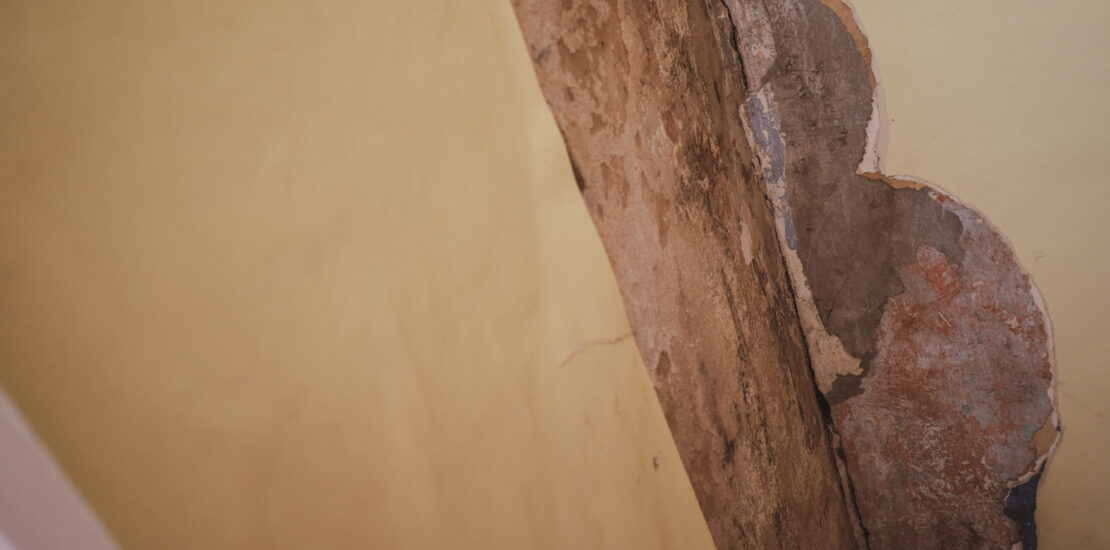
One family we helped lives just five minutes away from the Sheffield Hub. We met the mother at a local community centre, which acts as a Warm Space. Despite limited shared language, she understood the word ‘insulation’ and she was able to communicate that there were significant issues with her home. From there, we arranged a home visit and took one of our Winter Warmth Support Packs. It was one of the coldest houses that we’ve ever visited. I was greeted at the door by both parents, wearing winter coats and hats inside. The dining room was covered in black mould. When we spoke, we could all see our breath. It was like a fridge. After speaking to their daughter, who was fluent in English, she explained they hadn’t had a working boiler in years. Sadly, this is not an uncommon situation that we find. Many people live without working central heating because they just don’t know the options available to them.
We provided them with advice resources and talked through the options available to them. We applied for the grant through a local installer, who I met alongside the daughter and the parents. This helped the family feel confident knowing that they had third-party independent advice.
The family were offered loft insulation, internal wall insulation, a heat pump, solar panels and ventilation upgrades. We explain the benefits of each technology, the installation and potential behaviour changes. We also check over the paperwork agreed with the installers. In this case, the freezing dining room had been completely missed. This was because it had incorrectly been labelled as a kitchen because of the presence of two kitchen units. Kitchens are more expensive to insulate due to the cost of removing the units.
After speaking to the residents and the installers, we were able to use funding from Skipton Building Society. The room is now insulated, connected to the central heating system, and they have a new kitchen unit because the old one was so damp when we pulled it out that it literally fell apart.
We can visit during the install to talk to the installers during the fitting, so we can raise any concerns directly with the staff putting the measures in. There is generally some worry from householders feeling they are unable to complain because the funding is free. Ultimately, the installers are still being paid, whether it is directly from householders’ pockets or from the government.
We complement the installer’s handover phase once the work has been completed. We can make these accessible using the ReciteMe function on our website to provide householders with information in their first language to ensure they understand. We ensure that they understand the benefits of their new measures, including the Smart Export Guarantee for solar panels and the Heat Pump Tariff, which installers don’t always take the time to talk through.
Retrofit measures can be transformational, but understanding how to use them is vital to ensure that some of the most vulnerable households don’t slip through the gaps.
In terms of aftercare, we regularly schedule check-ins, but we’re also based in the community so we regularly run into clients we help, and they know we’re there for ongoing support. I ran into the sister-in-law of the woman we helped, and she told me that she used to regularly come to her house and complain about how cold her home was. Since the install, she’s not done that once.
The importance of insight
The Hubs exist not just to help households on the ground. We compile insights to help improve other organisations working to engage low-income households in the retrofit process:
– Delivery barriers: time-limited schemes cause bottlenecks, issues caused by the use of sub-contractors and a lack of paperwork.
– Resident needs: some in fuel poverty need additional spending to facilitate the grant works, or have pressing energy issues not covered by current schemes.
– Complexity: current processes can feel overwhelming and confusing; advice from knowledgeable advisers can produce better outcomes.
– Funding constraints: eligible houses can be overlooked for not being profitable enough, and some areas are on long wait lists.
– Trust: takes a lot of time to build and is damaged by past poor installs.
– Need for clear advice: location-specific, end-to-end advice from an independent source.
– Low awareness – limited knowledge about measures, grants and the eligibility criteria.