

- NEA NI welcomes long-awaited new Fuel Poverty Strategy but calls for urgent investment and a decade of delivery for households, children and families living in fuel poverty.
- Charity’s figures show 39% of households in Northern Ireland are in fuel poverty.
- Growing up in a cold home can impact health, academic attainment and life chances, according to evidence.
- Sustained and significant funding is essential to translate the strategy’s ambition into long-term action.
The fuel poverty charity National Energy Action Northern Ireland (NEA NI) has welcomed the publication of the NI Executive’s Warm Healthy Homes 2026–2036 strategy, describing it as a significant milestone after years of campaigning, while warning that urgent action and sustained investment will be essential to turn ambition into delivery.
What the strategy commits to
Key commitments include improving the energy efficiency of homes, raising housing standards across all tenures, improving energy wellbeing and consumer protections, and strengthening action to address the health risks of cold homes.
A proposed, new Warm Healthy Homes Fund will aim to deliver £150 million of energy efficiency investment in its first five years. The strategy also commits to improved monitoring and reporting on fuel poverty and its impacts, including an annual Ministerial statement.
Ambition must be matched by delivery
NEA NI has welcomed the direction of travel set out in the strategy and the opportunity it presents to deliver long-term action on fuel poverty. However, it has expressed disappointment at the absence of a clear, overarching target for reducing fuel poverty.
To turn ambition into real change, NEA NI stresses that sustained political commitment and funding are essential.
Pat Austin, Director of NEA NI, said:
“The publication of this strategy is a welcome and landmark moment, but publication alone will not change the reality for households desperately struggling to heat their homes. Fuel poverty remains unacceptably high, with our most recent LucidTalk polling showing that 39% of households are fuel poor and too many households are forced to make impossible choices between heating, eating and other essentials.”
Investment must reach those in need
Pat Austin added:
“This strategy has real ambition, but it will only succeed if it is backed by significant and sustained investment. Fuel poverty affects all tenures, but the private rented sector continues to be the poor relation in existing funding programmes and must be prioritised if we are to deliver lasting change.”
The strategy is published following recent publication of the UK Government’s £15 billion Warm Homes Plan, from which NI will receive Barnett consequential funding. NEA NI is urging the Executive to seize the opportunity of this additional funding to deliver on its fuel poverty commitments.
“The Executive now has both the framework and an opportunity to move at pace. That funding must be used to implement this strategy in a way that delivers meaningful and lasting change for households in fuel poverty.”
The human cost of cold homes
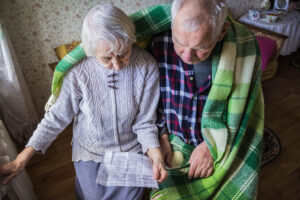
Living in a cold, damp home has devasting consequences for health and wellbeing and contributes to hundreds of excess winter deaths every year. For children, evidence shows that growing up in cold and damp home can impact their health, academic attainment, comfort and life chances.
Shannon Barber, Policy and Campaigns Officer, NEA NI, says:
The plight of people living in cold, damp homes must end. As the strategy itself recognises, its publication is not the end of the journey but the beginning of a decade of delivery. We look forward to continued collaboration with the Executive, the Department for Communities and stakeholders to ensure this strategy really does deliver a reduction in fuel poverty.”
ENDS
Notes to editors:
- National Energy Action (NEA) is the national fuel poverty charity. We’ve worked across England, Wales, and Northern Ireland for over 40 years, to ensure that everyone can afford to live in a warm, healthy home. Together with frontline practitioners, companies, regulators and governments, National Energy Action works to support vulnerable clients, raise awareness and achieve enduring change. See: www.nea.org.uk.
- The definition of fuel poverty that National Energy Action uses is that a household is in fuel poverty if it needs to spend 10% or more of its income on energy in order to maintain a satisfactory heating regime.
- NI representative polling, commissioned by NEA NI and conducted by LucidTalk in September 2025, found that 39% of households were spending over 10% of their household income on heating and electricity. See: https://www.nea.org.uk/publications/lucidtalk-nea-ni-september-2025-northern-ireland-ni-attitudinal-poll.
- The Winter Excess Figures for 2023/24, released by the Northern Ireland Statistics and Research Agency (NISRA) showed that there were 740 winter excess deaths.
We are on Twitter/X, Facebook, and Instagram: @NEANIreland and Bluesky: @neanireland.bsky.social.