

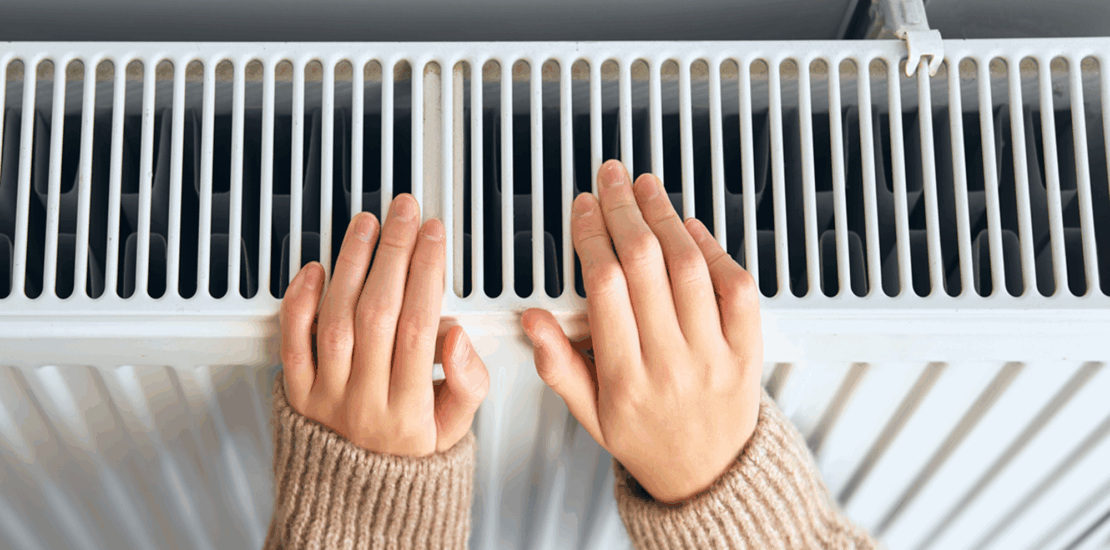
Our Communications Officer Brigitte Anton explains how households in Northern Ireland can best prepare to keep their homes warm this winter.
We may be enjoying some beautiful autumn sunshine, but temperatures have dropped and will continue to over the next few weeks and months. If you are on a low income, live in the private rented sector or live in an old, cold home (or all three), you now need to prepare for the cold season. Recommended temperatures for a healthy home are between 18°C and 21°C.
Having lived in cold homes in the private rented sector for many years (I have many stories to tell), I have some tried and tested methods to keep warm.
Energy debt, your meter and your bills
If you can, save money over the summer, or try to pay off your energy debt. If you are on direct debit (electricity and/or gas), and you have kept the same payment every month, you probably already saved some money over the summer, when the heating is (mostly) off.
If you are using a keypad/pay as you go meter, understanding its functions will help you understand your electricity usage and save some money:
• Press # to see the amount of credit left
• Press 1 to see the credit time left in days
• Press 2 for the cost of usage for the previous day, week and month
• Press 3 to see the unit rates and number of units left
• Press 6 for the electricity being used presently in kilowatts – this will reduce when you switch appliances off
• Press 8 to see the highest consumption in any half-hour in the last 24 hours and when it occurred
To keep an eye on your spending, take regular photographs of your meter so that you know how much energy you are using per week or month. This will prevent some nasty surprises, especially if you have just moved into a new flat. Some providers have a handy tool where you can submit an energy reading and it will calculate how much your next bill will be.
If you are getting bills or you can look at your bills online, having an understanding of unit prices and how your costs are calculated can help you saving some money. Get friendly with your bills.
Stop heat escaping
Draught excluders are a cheap way of preventing heat escaping under doors. You can also make them using rolled up blankets or an old jumper sleeve. Also check for any other gaps and close them. You can get self-adhesive insulation tape for gaps in or under window frames.
If you do not have double-glazing, you can use what is called ‘secondary glazing’. The cheapest type of secondary glazing involves attaching some form of plastic sheeting stretched across the window at the beginning of the winter. Sheets of acrylic plastic, cut to size and with a magnetic edge can be used. Some are held in place by plastic carrying strips that are stuck to the window frames using double edged tape/velcro tape. The plastic can be durable enough to be taken down and reused. You need to ensure that at least one window in the room is left uninsulated or can be easily opened to allow for ventilation.
Fitting thick or thermal curtains over windows and external doors will also prevent heat loss.
Radiator reflector panels behind electric radiators help reflect warmth from radiators into your room and may make your heating more efficient. You can buy them or make them yourself with cardboard and tin foil.
If you have wooden or laminated floor or even (thin) carpet, rugs are another way of keeping the house warm, especially if you live on the ground floor. You can pick up some in the summer sales and have them ready for winter. You can even make some out of strips of old t-shirts or blankets. However, they can be a tripping and slipping hazard if you have balance problems or are elderly. In that case, consider thick underlay for your carpet.
Condensation and ventilation
A dehumidifier is also great to use when you have to dry your washing in the house or flat. Ideally, you should dry your washing outside as much as you can, but if the weather is too wet or you don’t have access to an outside space, your washing dries quicker inside when you place your dehumidifier beside your drying rack. If you can invest in an electric drying rack, the better. Leave your window open if you can while drying your washing inside to prevent damp, or dry it in the bathroom with your fan on.
If a dehumidifier is out of your price range, there are cheaper disposable 500l versions available which you can get in B&M, Home Bargains and Amazon, etc.
Even in the winter, open your window every day for at least 10 minutes, even when it’s freezing. A good breeze of fresh air will help to prevent damp and mould.
Ways to keep yourself warm
Other things to pick up in the summer or any other sales: an Oodie or long fleece/sweatshirt, warm socks, warm slippers, a warm duvet, warm blankets, a heated blanket, an electric underblanket, and an air fryer.
Stock up on cup-a-soups or tins of soups. These help you keep warm when you can’t turn up the heating. Putting boiling water in a thermos flask and sipping it during the day also helps to keep warm.
Also, if you can, go for walks to keep the body warm. That walk can be to a warm space, like a library or community centre, or a friend’s house that’s warmer than yours.
Energy saving tips:
- Make sure to turn lights off when you leave a room. The cheapest unit of energy is the one you don’t need to use.
- Unplug or switch devices off at the wall, and only charge phones for as long as is necessary. Items plugged in (even on standby) still use electricity, which could add up if you have a lot of items plugged in.
- Limit your shower time. Using an electric shower can be really expensive. Although it is so nice, set a timer to make your showers shorter. You can save money by turning off the shower while shampooing.
- Insulating your hot water tank will significantly reduce heat loss, keeping your water hotter for longer and lowering energy bills. To check if your cylinder is insulated, feel the tank’s exterior or look for a jacket. If the tank feels hot to the touch or if it’s an older, bare-metal model, it needs more insulation, which can be added with an additional jacket (at least 80mm thick) to save energy.
- Washing your clothes at 30°C or the eco setting can lead to significant savings, with most detergents formulated to work at lower temperatures.
- Cooking in a microwave or air fryer is cheaper than an oven as it uses less power and takes less time to cook. Slow cookers are also more energy efficient than hob or oven cooking. They take several hours to cook food but use very little electricity to do so. Limit your oven use, and do not heat your kitchen with your oven. That’s really expensive.
- Boiling a full kettle uses a lot of energy, so just boil enough water for what you need.
- Be careful with your immersion heater!!! You know the drill.
- Spend time with your timers. Learn to set your heating timer to match your heating on and off times with your lifestyle. Turning it off when you’re out helps you to economise.
- Switch to low energy LED bulbs. These use much less electricity and last much longer than older incandescent bulbs, while providing the same level of lighting. So, update any older bulbs you may still have.
Sadly, it seems like nothing much has changed since my student days of Superser gas heaters and writing essays in bed with a woolly hat on. With our high energy prices, it remains expensive to heat your home, but these tried-and tested tips will make it easier to save energy and keep warm.
For more information, please check out our advice leaflets here.