
Tara McConaghie, Training and Assessment Officer at National Energy Action shares her learnings from working with young people: ‘Real change starts with simple conversations, not numbers.’
Projects4Change works with young people aged 11–19 in Cowgate, Newcastle upon Tyne. They support those who feel unheard or disadvantaged. Their goal is to help young people build confidence and brighter futures.
With Siemens funding, I led a long–term project with the group. Projects4Change runs as a drop-in, so I had to adapt fast. The people attending often changed so I shaped each session around whoever was in the room. I also changed my priorities while I was there. At first, I wanted to reach as many young people as possible. But attendance changed every week, and I realised that the target didn’t make sense in a drop-in space. Instead, I focused on having meaningful interactions with the young people who were actually in the room. That shift made the work feel more real and more honest.
I ran interactive sessions with the Junior Toastie Club, a drop-in session for young people aged 8-11. We played drama games, including becoming Energy Detectives. As part of this, the young people looked for energy wastage in their everyday lives and planned how to reduce it, so they could improve the environment and household finances. The group loved hands-on work, so I planned craft sessions too. We made draught excluders. We designed Energy Superheroes with powers linked to energy saving. We also made fridge magnets with simple energy tips. Their creativity and enthusiasm were brilliant, and the magnets could be proudly displayed at home to encourage behaviour change.
These relaxed sessions opened natural conversations about staying warm at home during colder months. We shared small actions that help, like closing windows or switching off lights. I saw how much more they engaged when we talked.
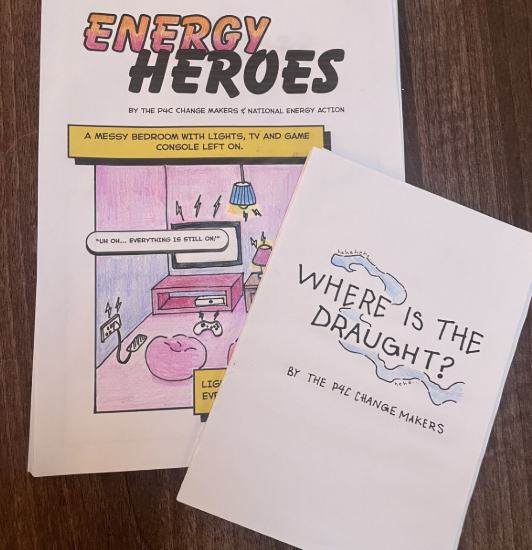
The collaboration with the Change Makers led to some fantastic creative outcomes. The Change Makers are volunteers aged 14–18, who are trained to consult with their peers and give young people across the North East a voice. Together, we created an Energy Heroes cartoon strip and a Where is the Draught? storybook. Both resources will now be used by the National Energy Action Education team to help other young people learn about energy use in a fun and accessible way.
I also brought a thermal imaging camera. The older group and the leaders loved it. I wanted them to see heat loss in a way numbers can’t show. The camera made the invisible visible. They could spot cold patches, warm air leaks, and hidden draughts in seconds. The Cowshed is an energy efficient space, so it was great to explore it with them. They compared walls, windows, doors, and even their own hands. They quickly spotted how simple habits, like keeping doors closed, can make a meaningful difference in staying warm. This sparked deeper discussions about cold, damp homes. They linked this to mental health and how hard it is to focus in school. This is sadly an impact that we’re also hearing from educators through our recent ‘A Warm Homes, A Fair Chance’ report.
This work taught me something important. A flexible, youth–led approach builds trust. Meeting young people where they are matters, and prioritising conversation over data matters even more.


