

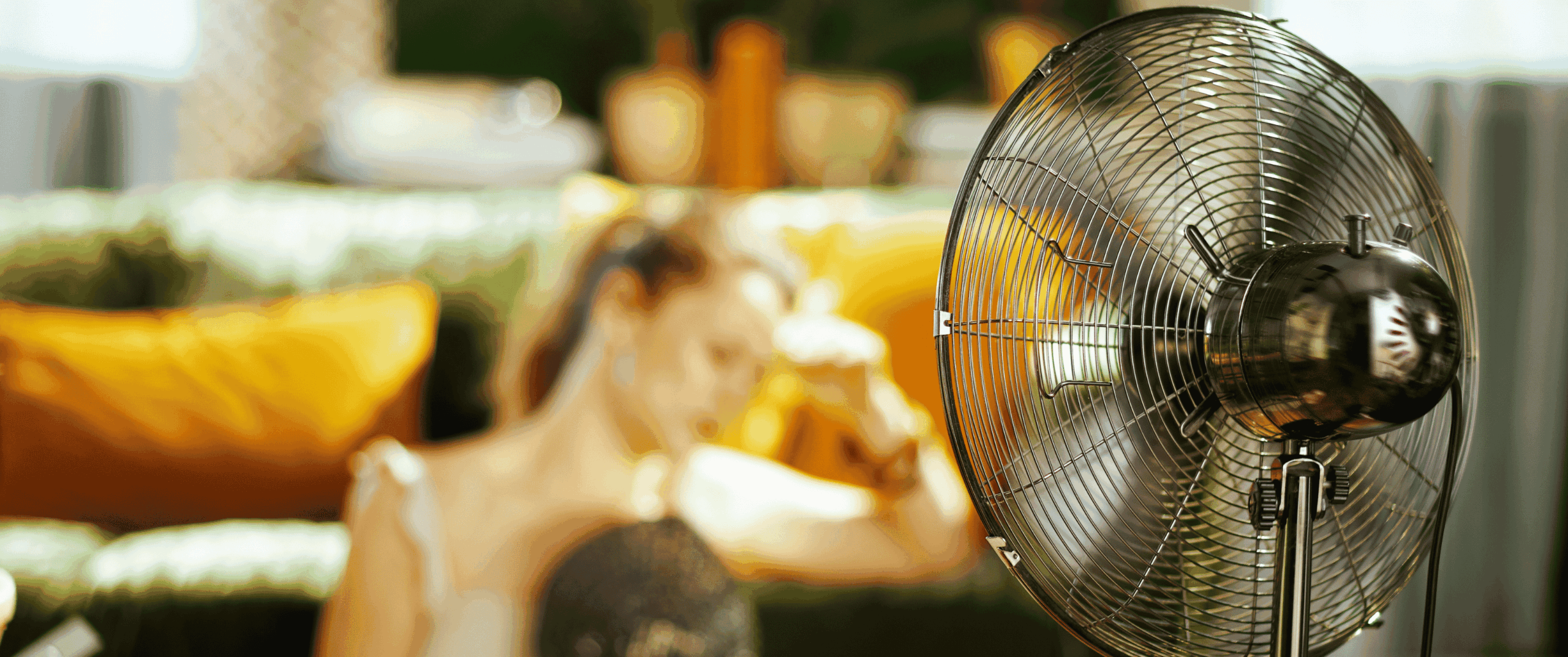

Tips to keep your home cool
When we think about struggling with energy bills, most of us picture cold homes in winter. But as the UK experiences hotter, longer summers, a new challenge is emerging: keeping homes cool safely and affordably.
One in six babies in England are now living in overheated homes, with more than 70,000 infants exposed to dangerously high indoor temperatures. And research suggests overheating affects 80% of UK homes, with rates rising dramatically over the past decade.
For families already struggling with energy costs, this creates an impossible situation.
How can you keep your home cool?
Understanding the differences between cooling devices is important, especially when every penny counts.
Fans
- Move air around to create a cooling sensation on your skin
- Do not lower the temperature of a room
- Very cheap to run
Typical costs (based on 25.7p/kWh electricity price):
- Small desk fan (20W): 0.5p/hour
- Pedestal fan (50W): 1.3p/hour
- Large fan (75W): 1.9p/hour
Fans are often the most affordable option, costing just pennies per day even with regular use.
Air coolers (evaporative coolers)
- Use water to slightly cool air
- More effective than fans in dry conditions
- Still relatively low energy use but make sure you follow the instructions to avoid the risk of Legionnaires’ disease.
Air conditioners
- Actively remove heat and reduce room temperature
- Most effective for cooling
- Much more expensive to run
A typical portable air conditioner (1,000–1,500W) can cost around 26–39p per hour, roughly 14–20 times more than a fan.
While air conditioning provides real relief, it is often out of reach for fuel-poor households due to both upfront and running costs.
Low-cost ways to stay cool
If you cannot afford mechanical cooling, small changes can still make a difference.
- Keep heat out by closing curtains or blinds during the day, especially on sun-facing windows
- Keep windows closed when it is hotter outside than inside
- Let cool air in
- Open windows in the evening or overnight
- Create cross-ventilation if possible
Use fans more effectively
- Place a bowl of cold or iced water in front of a fan to create a cooler breeze
- Avoid pointing fans directly at babies or vulnerable people
Reduce indoor heat
- Turn off unused appliances
- Avoid cooking during the hottest part of the day
Simple cooling tricks
- Keep a damp cloth nearby to cool your skin
- Use frozen hot water bottles or ice packs – but once you’ve used them for cooling, don’t use them for hot water in the winter as it can affect the rubber
- Stay hydrated by drinking plenty of water – Put bottles of tap water in the fridge so you don’t waste water running the tap until it gets cold
- Pet cooling pads can be used for humans too!
Some households also use dehumidifiers to reduce moisture in the air. When you sweat, moisture on your skin absorbs heat and turns into vapor, carrying heat away from your body. While a dehumidifier does not lower the air temperature, it can take out existing moisture in the air stopping the sweat from sitting on your skin, making you feel hot and sticky.
For more practical ideas, see https://selce.org.uk/how-to-keep-cool-this-summer.
Ways to get energy bill help



What needs to change
As the climate warms, fuel poverty must be recognised as a year-round issue.
This means:
- Improving homes so they stay warm in winter and cool in summer
- Investing in ventilation, shading and passive cooling
- Ensuring energy is affordable for essential needs, including cooling
- Providing targeted support for vulnerable households
Because no one should have to choose between their health and their energy bill, whether it is January or July.