
Decarbonising Homes: Technologies, Impacts and Solutions CQ11527 (Level 4)
E-LEARNING COURSE
There are so many different ways householders can get involved in the green transition. This course provides a practical understanding of a range of low carbon and renewable technologies, their impacts, and how they can help people living in fuel poverty.
The content combines insight from National Energy Action’s own extensive experiences of trialling the use of innovative technologies in low-income and vulnerable households, with data from other recent prominent studies.
To achieve the UK’s target of Net Zero carbon emissions by 2050 it will be essential to transform our existing housing stock, with insulation, low carbon heating, and renewable energy generation. This course will look at these new technologies to provide a practical understanding of their impacts and how they can help people living in fuel poverty.
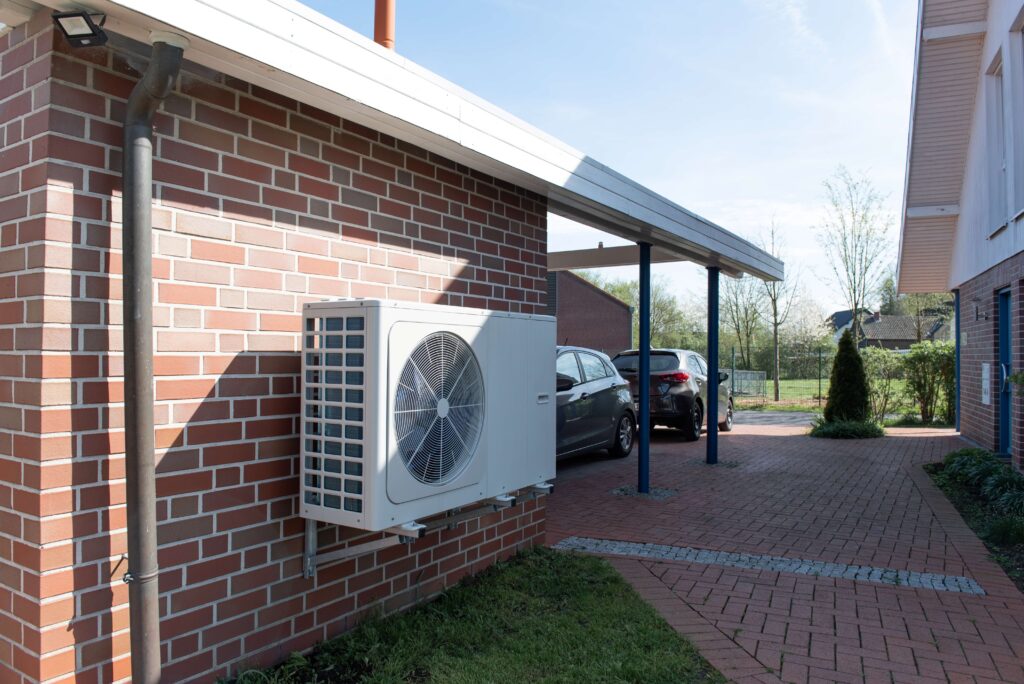
Technologies such as heat pumps and solar PV have the potential to make energy more accessible and affordable for millions of low-income and vulnerable households, but only if used appropriately and individuals are effectively engaged and supported throughout the transition.
Housing providers, installers and advice agencies will have a key role in supporting these individuals on their low-carbon journey. To do this successfully they need to be equipped with sufficient understanding of the breadth of technologies available and how those technologies perform in different settings. They also need to understand how to support individuals with optimising the technology, which may include changes in behaviour.
The insights and knowledge gained from our training will be relevant to anyone who may be engaging with or supporting low income and vulnerable consumers on low carbon or renewable heat and power, including housing providers, advice agencies and installers.
- Identify and Understand the links and issues associated with Decarbonisation and net zero technologies and their impacts on householders.
- Identify householder / community engagement as a priority
- Consider the potential impact of a selection of low carbon technologies on household bills and comfort
- Explain how to select suitable technologies for different property types
- Identify common installation and operational issues
- Explain how to effectively engage and assist residents with understanding the technology
Please find below an overview of the modules and the topics covered in each.
The full course consists of eight modules. Please see the module content table below for details of the suggested study time for each module and assessment.
E-learning and online assessment.
Find out more
This course is delivered through e-learning, so learners will need basic computer skills to access and navigate the course.
At level 4, the assessment is also on-line and will require learners to show the ability to evaluate information, carry out analysis of data and provide answers in a short essay format.
It is expected that learners for this course will already have a good understanding of general domestic energy efficiency issues and knowledge of heating systems, measuring consumption and fuel bills etc. Ideally, learners will already have passed the Level 3 Energy Awareness qualification.
Decarbonising Homes is made up of eight modules, outlined above. Learners may choose to complete the full programme or select individual modules that are most relevant to their learning needs.
All e‑learning is self‑led, enabling learners to study at a time and place that suits them.
Once booked, learners will have access to the e‑learning content for four weeks per module, or six weeks per module if also undertaking the assessment. When booking multiple modules, access periods are applied consecutively (for example: one module = four weeks, two modules = eight weeks).
Suggested study times for each module are provided in the ‘Course Content’ section above. These are intended as a guide only and may vary depending on individual learning styles and experience.
The course features audio throughout and uses a range of engaging learning tools, including videos and interactive activities, to support effective and accessible learning.
Tutor support is available on request throughout the learning period.
There are no set dates, learners choose when they would like to start on their booking form, and we send the course login details to match.
This course is currently only available via e-learning. If you are interested in a webinar or in-person version, please contact us to discuss options.
Funded places are available for the following modules:
- The Role of Heat Pumps
- The Role of Solar Technologies and Energy Storage
- Appropriate Electricity Tariffs for New Technologies
Funded places are available to non-commercial/ not for profit organisations based in England and Wales (such as local authorities, housing associations, advice agencies etc). Learners must also be frontline staff or volunteers that encounter and provide advice to those in or at risk of fuel poverty.
Learners can apply for funding for one or all three modules (learning and assessments). Learners can also apply/ pay for the other modules separately if they wish to complete the full qualification.
To find out more about funded places, please contact trainingadmin@nea.org.uk
Learners will have the opportunity to complete an assessment for each module. On successful completion of all eight modules and their associated assessments, learners will achieve the Decarbonising Homes: Technologies, Impacts and Solutions (CQ11527) Level 4 NCFE qualification.
For learners who prefer not to complete the full course, certificates of unit credit are available for individual modules.
All assessments are open book and are delivered via an online platform. There are no fixed exam dates; learners may complete each assessment at a time that suits them and submit their responses when ready.
The recommended study time for each assessment is 2–3 hours. Further details are outlined above.
This qualification has been accredited as a Customised Qualification and we have benchmarked the qualification’s learning outcomes and assessment criteria at Level 4 to allow you to demonstrate the difficulty and depth of study.
NCFE is an awarding organisation recognised by the qualification regulators for England (Ofqual), Wales (Qualifications Wales) and Northern Ireland (CCEA Regulation). This is an unregulated qualification and is not a nationally recognised qualification
All courses and processes are assessed in line with BSI ISO 9001 quality management standards.
To maintain their effectiveness, courses are reviewed and updated on a regular basis. If you identify any gaps, inaccuracies, or areas for improvement, we encourage you to share your feedback with us.
Upon successful completion of the course, learners will be able to download a certificate of completion for their CPD records.
If you have any questions, please contact us to discuss.
Fees (per person)
| Modules available | Funded places are available for the following three modules (learners must complete the e-learning and assessments): |
| The Role of Heat Pumps | |
| The Role of Solar Technologies and Energy Storage | |
| Appropriate Electricity Tariffs for New Technologies | |
| Eligibility Criteria | Available to non-commercial/ not for profit organisations based in England and Wales (such as local authorities, housing associations, advice agencies etc). Learners must also be frontline staff or volunteers that encounter and provide advice to those in or at risk of fuel poverty. |
| How to apply | Please go to the ‘find out more’ section above for the booking form. Learners can apply for funding for one or all three modules (course and assessments). Learners can also apply/ pay for the other modules separately if they wish to complete the full qualification. To find out more about funded places, please contact trainingadmin@nea.org.uk |
| NOT FOR PROFIT ORGANISATION | COMMERCIAL ORGANISATION | |
|---|---|---|
| 1 MODULE – e-learning only | £72 plus VAT | £83 plus VAT |
| 1 MODULE – e-learning and assessment | £192 plus VAT | £213 plus VAT |
| 2 MODULES – e-learning only | £144 plus VAT | £166 plus VAT |
| 2 MODULES – e-learning and assessment | £354 plus VAT | £396 plus VAT |
| 3 MODULES – e-learning only | £207 plus VAT | £236 plus VAT |
| 3 MODULES – e-learning and assessment | £507 plus VAT | £566 plus VAT |
| 4 MODULES – e-learning only | £275 plus VAT | £315 plus VAT |
| 4 MODULES – e-learning and assessment | £665 plus VAT | £745 plus VAT |
| 5 MODULES – e-learning only | £345 plus VAT | £393 plus VAT |
| 5 MODULES – e-learning and assessment | £825 plus VAT | £923 plus VAT |
| 6 MODULES – e-learning only | £413 plus VAT | £472 plus VAT |
| 6 MODULES – e-learning and assessment | £983 plus VAT | £1,102 plus VAT |
| 7 MODULES – e-learning only | £482 plus VAT | £551 plus VAT |
| 7 MODULES – e-learning and assessment | £1,142 plus VAT | £1,281 plus VAT |
| 8 MODULES (FULL COURSE) – e-learning only | £551 plus VAT | £629 plus VAT |
| 8 MODULES (FULL COURSE) – e-learning and assessment | £1,301 plus VAT | £1,459 plus VAT |
| NOT FOR PROFIT E-LEARNING ONLY | COMMERCIAL E-LEARNING ONLY | |
|---|---|---|
| 1 MODULE – e-learning only | £83 plus VAT | £93 plus VAT |
| 1 MODULE – e-learning and assessment | £213 plus VAT | £233 plus VAT |
| 2 MODULES – e-learning only | £166 plus VAT | £186 plus VAT |
| 2 MODULES – e-learning and assessment | £396 plus VAT | £436 plus VAT |
| 3 MODULES – e-learning only | £236 plus VAT | £266 plus VAT |
| 3 MODULES – e-learning and assessment | £566 plus VAT | £626 plus VAT |
| 4 MODULES – e-learning only | £315 plus VAT | £354 plus VAT |
| 4 MODULES – e-learning and assessment | £745 plus VAT | £824 plus VAT |
| 5 MODULES – e-learning only | £393 plus VAT | £443 plus VAT |
| 5 MODULES – e-learning and assessment | £923 plus VAT | £1,023 plus VAT |
| 6 MODULES – e-learning only | £472 plus VAT | £531 plus VAT |
| 6 MODULES – e-learning and assessment | £1,102 plus VAT | £1,221 plus VAT |
| 7 MODULES – e-learning only | £551 plus VAT | £620 plus VAT |
| 7 MODULES – e-learning and assessment | £1,281 plus VAT | £1,420 plus VAT |
| 8 MODULES (FULL COURSE) – e-learning only | £629 plus VAT | £708 plus VAT |
| 8 MODULES (FULL COURSE) – e-learning and assessment | £1,459 plus VAT | £1,618 plus VAT |
access member prices
Join a national network working to end fuel poverty and access exclusive resources, expert insights, and discounted rates on NEA training courses.