


Price cap rise: low-income and vulnerable households need a proper ‘breathing space’ on energy bills and debt
- 26 August 2026
Today (26 August), Ofgem announced that the price cap will rise by 4% from 1 October, meaning a typical household will pay £1,723 a year for their energy.
Share
Contact: Nick Palmer, Press and Media Officer, nick.palmer@nea.org.uk Mobile: 07596 858719
Price cap rise: low-income and vulnerable households need a proper ‘breathing space’ on energy bills and debt
- Today (26 August), Ofgem announced that the price cap will rise by 4% from 1 October, meaning a typical household will pay £1,723 a year for their energy ¹
- Fuel poverty charity warns that households already trapped in energy debt will find that crisis deepen into winter
- National Energy Action says the Prime Minister’s removal of VAT from electricity bills is welcome, but the most vulnerable households need proper breathing space through debt relief and targeted support
Energy bills are rising 4% from October, energy regulator Ofgem announced today (Wednesday 26 August).
A three-year high for energy prices eclipses the VAT cut on electricity, dwarfs the financial support available to low-income households and will be a hammer blow heading into winter.
Fuel poverty charity National Energy Action warns that millions of low-income and vulnerable households will plunge deeper into debt, which currently stands at £6 billion², and has grown every quarter since autumn 2022.
Adam Scorer, National Energy Action Chief Executive, says:
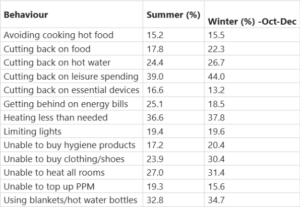
‘Cooling homes in summer and warming homes in winter³ makes the world of difference. Rising energy prices heading into winter will plunge people into despair and place millions at risk.
‘Today, Ofgem announces that prices will hit a three-year high. The rise in gas prices is especially concerning with over seven in 10 fuel poor households heating their homes with gas.
‘People will have to retread this dreadful and familiar path. They will be forced to not heat their homes, not to cook hot food, ration washing their clothes and going to bed at dusk.
‘The new government has the same challenges as the last. It needs to strengthen targeted winter bill support through a tiered Warm Homes Discount model of the sort proposed this week by Energy UK and it needs to move quickly to establish a Debt Relief Scheme.
‘Establishing a breathing space for people struggling with the cost of essential services is hugely important. This is the litmus test.’
ENDS
Notes to editors
- The price cap is shown as the annual energy bill of a ‘typical’ household. This is called the Typical Domestic Consumption Value (TDCV). Ofgem announced the TDCV is being decreased to reflect lower consumption of energy, as a result of rationing and energy efficiency measures. The new ‘typical’ household consumes 2,500 kWh of electricity and 9,500 kWh of gas per year. This is down from 2,700 kWh of electricity and 11,500 kWh of gas per year. The new TDCVs will be used to express the default tariff price cap levels in all Ofgem publications from July 2026 onwards. See Ofgem explainer.
2. Total energy debt has reached £6 billion according to Energy UK: www.energy-uk.org.uk/news/energy-debt-hits-6-billion
4. www.gov.uk/government/statistics/fuel-poverty-detailed-tables-2026-2025-data
If this goes online, please link to https://www.nea.org.uk/energy-crisis/. We are on Twitter/X: @NEA_UKCharity and Bluesky: @nea.org.uk.
Share
Subscribe to newsletter
Stay up-to-date with National Energy Action’s work and how we are helping those most in need.